Travel equipment worth packing

What to bring to Japan, what to leave behind, and the checks to make before flying.

Pack a bag you can carry

By Yui

Packing requirements depend on the itinerary, weather and airline baggage limits. Essential documents and difficult-to-replace items take priority. A loaded-bag walking and stair test helps identify excess weight; some optional equipment can be bought or rented in Japan.

What earns a place in the bag?

  • Essentials: travel documents, required medication, phone and charger, payment backup, comfortable shoes and weather-appropriate clothing.
  • Depends on your trip: a small day bag, power bank, rain layer, laundry supplies and equipment for booked activities.
  • Optional: a separate camera, extra lenses, specialist accessories and duplicate gadgets. A phone may cover your photography needs.

Minimal packing example: one main bag, a small day bag, a few outfits with a laundry plan, one familiar pair of walking shoes, toiletries, essentials and one charging kit. Add seasonal or activity-specific items instead of packing for every possibility.

Charging in Japan

Japan uses 100V power and commonly two-flat-pin sockets. Check each device’s input label: a plug adapter changes the fit, not the voltage. Do not assume a high-power appliance is compatible. See JNTO’s electricity guide

Check the flight limits once, before packing

Check your packed dimensions and combined baggage weight against every airline and fare you will use. Keep power banks and spare lithium batteries in cabin baggage and remove them if a bag is gate-checked.

ICAO’s March 2026 update limits passengers to two power banks and prohibits recharging them during flight. Airlines can be stricter about capacity, quantity and use to charge other devices. Read the watt-hour label and check the operating carrier’s current policy; the FAA battery guide explains the main handling restrictions.

On this page

Use the details below for fit, weight and comfort, then run through the departure checklist.

Official charging and battery sources checked 1 October 2026.

Person wearing a baseball cap and beige backpack facing a traditional Japanese shrine with red and white wooden architecture and surrounded by greenery.

Backpack

The Osprey Farpoint is one of my gear picks; choose the size and fit that work for your back and trip. Adjust the loaded bag before your test walk, and leave room for the items you will pick up along the way.

Back view of a Canon DSLR camera mounted on a tripod at night, capturing a well-lit urban building scene visible on the camera's LCD screen.

Camera

A phone is enough for many trips. If you take a separate camera, consider the weight of the whole kit, including lenses, batteries and charger. The Nikon Z6 III and DJI Osmo Pocket 3 serve different needs. Choose the one you will actually carry and use.

Flat lay of photography and tech gear on wooden floor including closed silver MacBook, two cameras, camera lenses, external hard drives, memory cards, camera flash, a grey backpack, and a canvas camera bag with strap.

Day bag

The Chrome Kadet Sling Messenger Bag is a compact day-bag option.

A small backpack may distribute the weight of water, clothing and camera equipment more evenly than a single-shoulder sling.

Close-up of transparent eyeglasses, a wooden earbud, and a key resting on a folded denim wallet on a dark wooden surface.

Wallet

A travel wallet needs space for Japanese coins and banknotes as well as cards. Pacsafe is one option.

A backup payment card should be stored separately, and card-blocking contact details should remain accessible. Small notes are useful at places such as Fukuoka’s yatai.

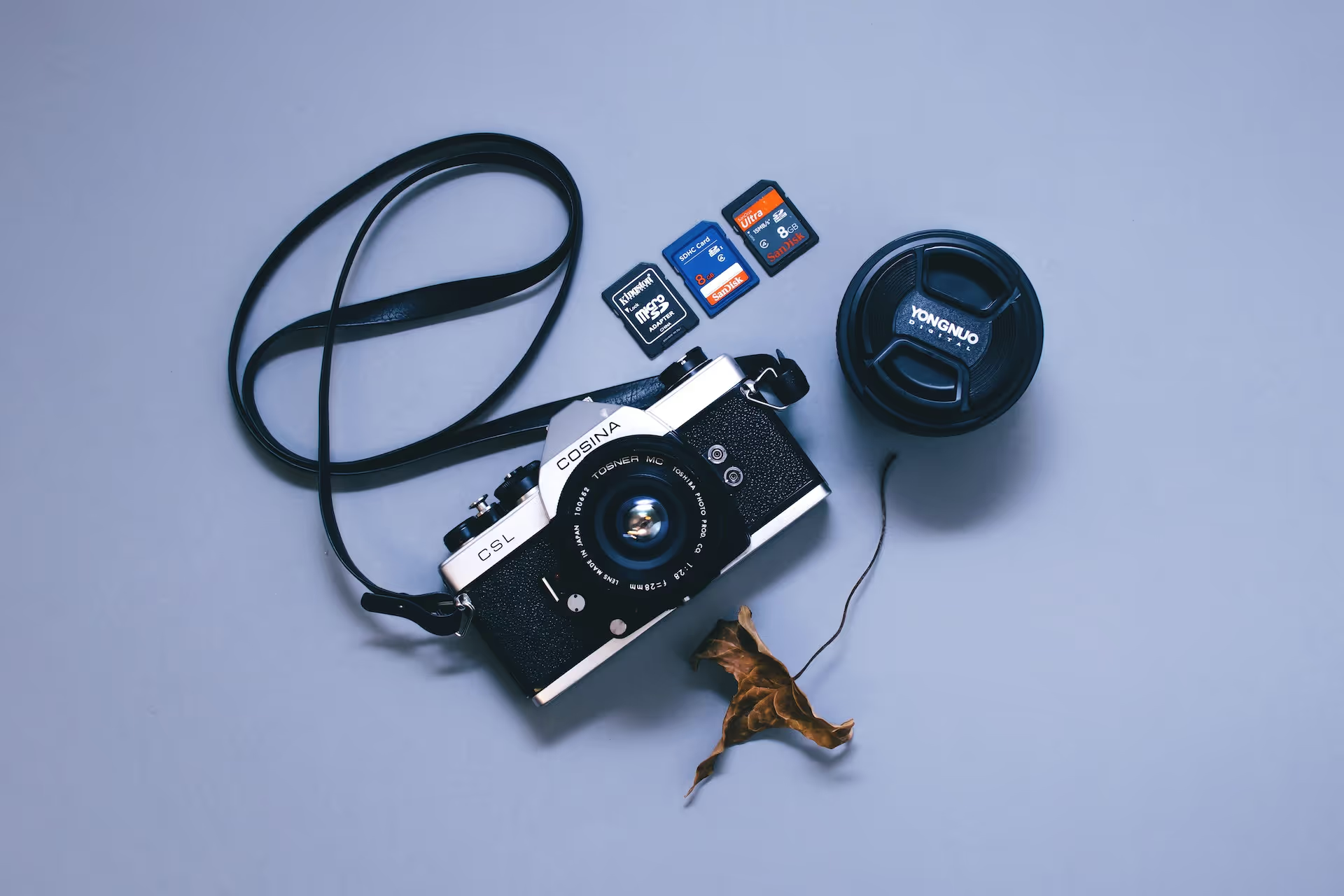
Vintage Cosina CSL film camera with a black strap, alongside three memory cards and a Yongnuo lens cap on a gray surface, accompanied by a dried brown leaf.

Memory cards

Match the card type and speed to your camera’s recording mode, then test it before the trip. Carry a spare and copy important photos to a second device or service when you can. Splitting photos across several cards limits a loss; a second copy is the backup.

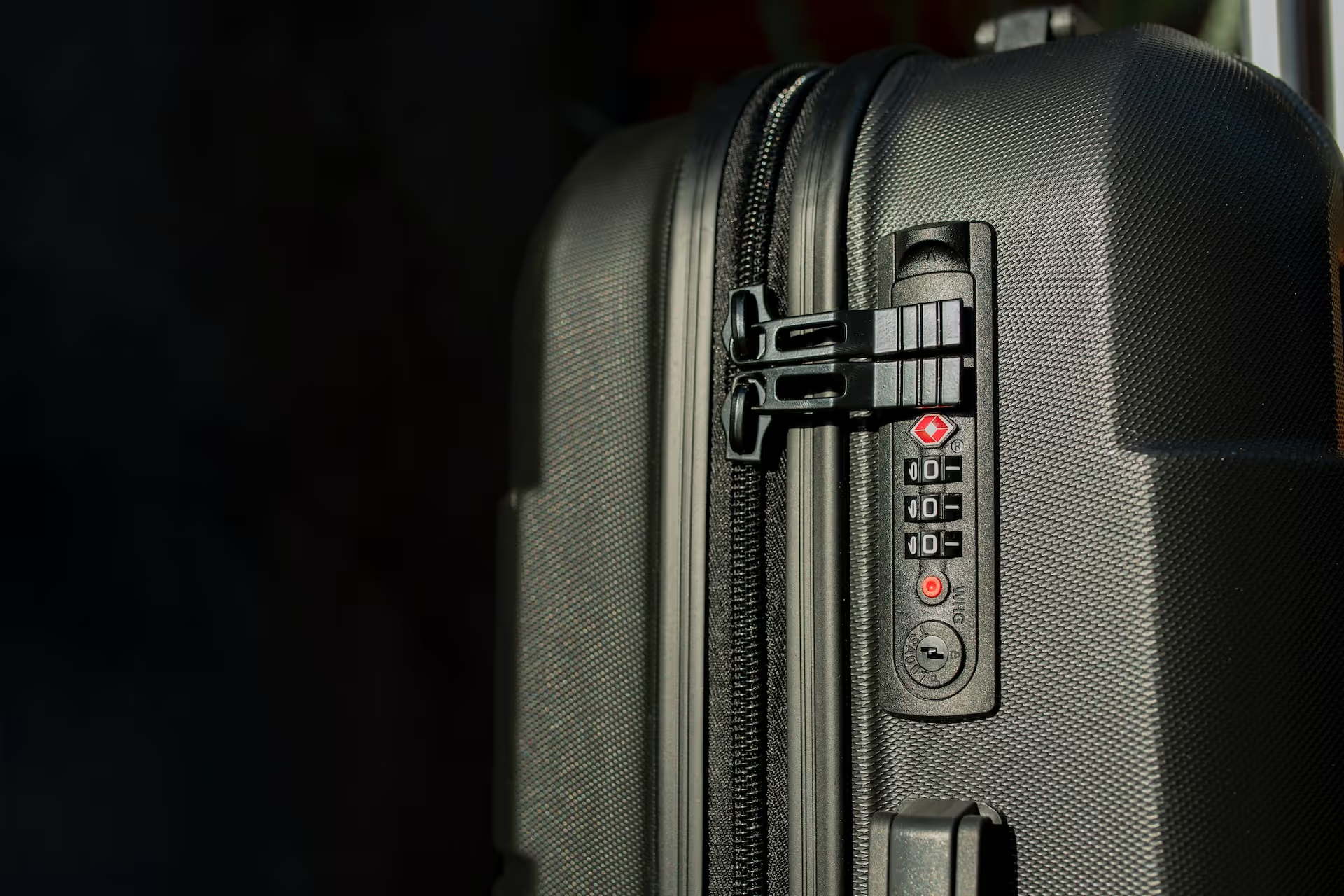
Close-up of a black hard-shell suitcase with a built-in TSA combination lock and two zipper pulls secured in the lock.

Travel locks

Check that your lock fits the bag or hostel locker you intend to use. It can deter casual opening, but keep valuables with you rather than relying on the lock. Inspection rules vary by country, so check the requirements along your route.

Pair of white wireless earbuds lying in front of a red charging case on a black surface with a dark background.

Earbuds

For a long flight, choose earbuds you can wear comfortably for several hours and check battery life. Noise-cancelling models reduce cabin noise; open-ear designs leave more surrounding sound audible.

Pack the right cable or adapter and pause audio for announcements and safety instructions.

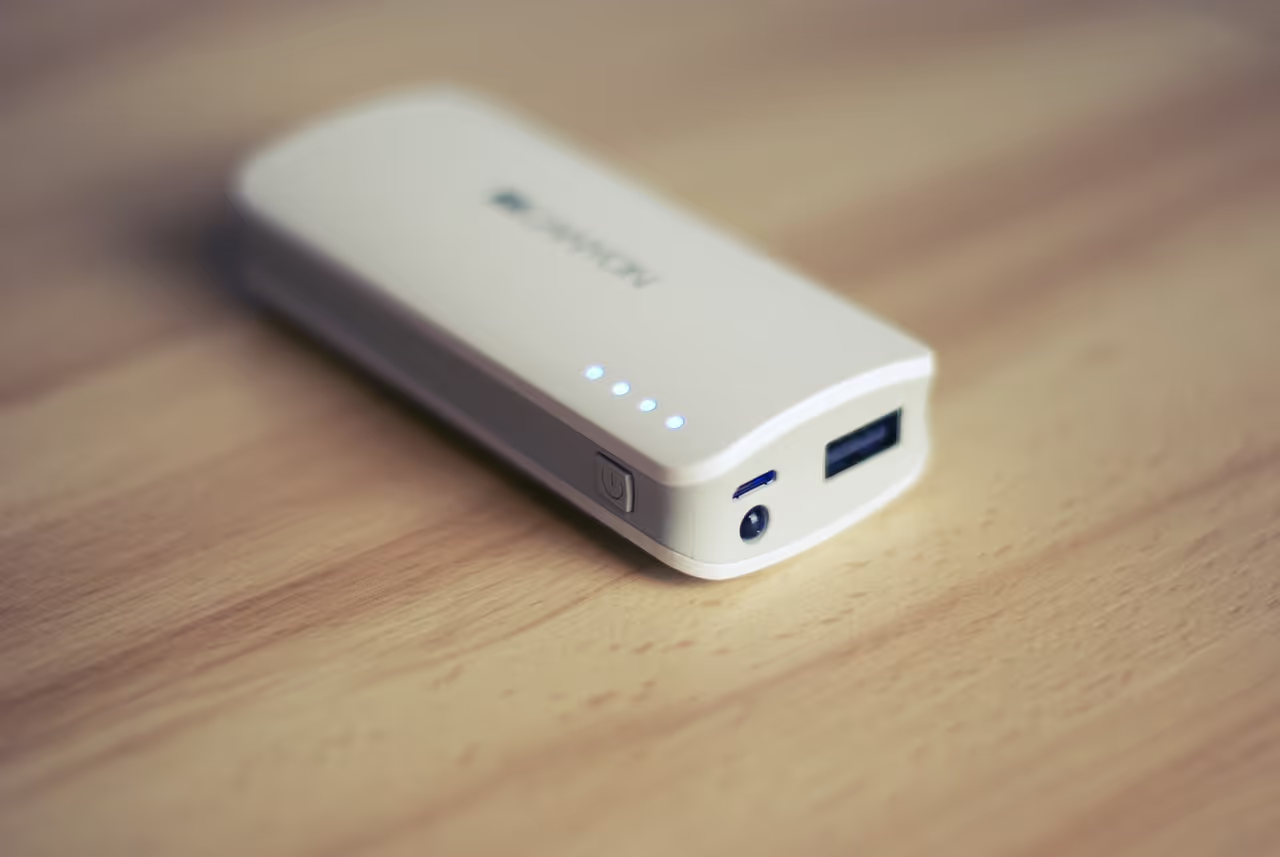
Cream-colored portable power bank lying on a wooden surface with four small LED indicator lights on and a USB port visible.

Power bank

Pick a power bank with a readable watt-hour (Wh) label and enough output for your devices. Up to 100 Wh is normally allowed; 101–160 Wh needs airline approval; over 160 Wh is not allowed for an ordinary power bank. Keep it in cabin baggage, remove it if your bag is gate-checked, and confirm your carrier’s current rules. ICAO also limits passengers to two power banks and prohibits recharging them in flight.

Black toiletry bag with various black personal care items including lip balm, tube of cream, foldable comb, toothbrush, and a pair of black socks with white grippy patterns on a light surface against a marble background.

Toiletries and laundry

Pack familiar essentials in leak-resistant containers, but check what your accommodation provides before bringing duplicates. On international flights departing Japan, cabin liquids generally need containers of 100 ml or less inside one transparent resealable 1 L bag. Necessary medicines and baby items have exceptions that may need separate screening. Check aerosols and blades, plus any connecting-flight rules, before you leave. A small laundry bag and a planned wash stop can save more space than extra outfits.

Pair of black leather sneakers with laces and textured rubber toe caps on a plain light background.

Insoles

Replacement insoles, including brands such as Superfeet, need to fit both your feet and your shoes.

Test them over several ordinary walks before departure; familiar footwear and regular breaks still matter.

Person sitting in an airplane seat looking out the window at a blurred aerial view of a city below.

Earplugs

Noise-reducing earplugs can help in a shared room or on a flight. Check their fit and follow the instructions. Ear pain caused by pressure needs a different approach; if it happens repeatedly, get medical advice before flying. Make sure you can still hear alarms and important announcements.

World map with location markers connected by lines surrounding a central shield icon labeled VPN, illustrating global virtual private network connectivity.

Staying connected

Before departure, check your roaming plan and whether your phone is unlocked and supports a Japanese SIM or eSIM. Pocket Wi-Fi may suit a group or a device that cannot use a local SIM, but it is another item to charge and return. Download offline maps, translation tools, your hotel address and booking details before you fly. Pack the cable and plug adapter you need. A VPN is optional; it does not replace strong sign-in or protect you from scams.

See our other Guides!

Dimly lit airplane cabin showing rows of seats with personal entertainment screens, one screen playing a black-and-white movie scene.

Ear pressure when flying

Understand ear pressure during flights, gentle comfort measures, and when symptoms need medical advice.

View of an airplane wing flying above a landscape at sunset with the sun low on the horizon and partly cloudy sky.

Flight Tips

Compare seats, connections and comfort choices for your actual aircraft and itinerary.

Rear view of a commercial airplane on a runway at night with runway lights and city lights blurred in the background.

Is the cheaper flight worth it?

Compare the complete journey cost, baggage, transfers and booking conditions before choosing a fare.

Compare flight costs
Close-up of a dark blue United States passport partially covering an international flight boarding pass with seat 16A, flight MUC-AOI to Ancona on February 3, 2016.

Japan entry requirements

Find the official Japan visitor-entry guidance for your nationality, residence and trip purpose.

Read Japan entry requirements
Wreckage of a large, old airplane fuselage with missing parts and visible damage, lying on barren dark ground under a cloudy sky.

Safety

Prepare for common travel problems in Japan, with official emergency resources and a practical fallback plan.

Read the Safety guide
Person wearing a hooded jacket and backpack standing by a large lake, looking at snow-covered mountains in the background.

Travel Checklist

Work through Japan entry, medicine, payment, connectivity and arrival checks before you leave.

Open Travel Checklist

Choose your stay in Japan

Compare Japan stay types by privacy, luggage, arrival time and total cost, including cancellation conditions.

Compare places to stay
Preferences

Privacy is important to us, so you have the option of disabling certain types of storage that may not be necessary for the basic functioning of the website. Blocking categories may impact your experience on the website. More information

Accept all cookiesClose cookie preferences

These items are required to enable basic website functionality.

Always active

These items are used to deliver advertising that is more relevant to you and your interests.

These items allow the website to remember choices you make (such as your user name, language, or the region you are in) and provide enhanced, more personal features.

These items help the website operator understand how its website performs, how visitors interact with the site, and whether there may be technical issues.

Thank you! Your submission has been received!
Oops! Something went wrong while submitting the form.
Open cookie preferences

Pack for your route, then remove the extras

ItemWho needs itSpace-saving alternative
Comfortable walking shoesAlmost every city visitorOne broken-in pair; a second bulky pair only if your activities justify it.
Waterproof jacket and dry bagForest walks and prolonged rainA compact shell; an umbrella alone is insufficient for an exposed hike.
Power bankLong days relying on a phone for tickets and navigationA modest-capacity battery rather than several heavy spares; check airline carriage rules.
Camera and extra lensA visitor who will actually use themYour phone, with spare storage and a backup plan.
Day bagWalking days away from accommodationA light pack that holds water, a layer and essentials.
Large suitcaseFew hotel changes and straightforward transfersA smaller bag when moving frequently or using accommodation with stairs.

For summer, favour breathable clothes, sun protection and easy access to water. In spring and autumn, bring layers for changing temperatures and rain. In winter, match warm layers, gloves and footwear to your destination; Tokyo city walking and snowy mountain travel need different equipment. Pack medication and essential documents first, then enough clothing to reach your planned laundry stop. Check the luggage limit of every flight and transfer.

A backpack can suit frequent moves and stairs if you can carry the loaded weight comfortably. Compare its fit and capacity with the luggage you usually take.

The Farpoint 40 is one example in the range, with an adjustable torso fit and front opening. Check the exact model’s dimensions against your airline. Skip a new backpack if your existing bag works; a wheeled case can suit a mostly hotel-to-station trip. A loaded test walk matters more than the brand.

A phone is enough for many trips: use it if your priority is easy memories and a light bag.

An interchangeable-lens camera such as the Nikon Z6 III suits travellers who want to choose lenses and accept carrying the kit. A compact stabilised camera such as the DJI Osmo Pocket 3 serves a different purpose: walking video with less equipment. Include lenses, batteries and chargers in the weight comparison. Your phone may already meet your needs.

The Chrome Kadet Sling Messenger Bag is a compact day-bag option. A small backpack may distribute the weight of water, clothing and camera equipment more evenly than a single-shoulder sling.

A day bag should accommodate the expected daily load and remain comfortable over several hours. Zipped compartments and wearing the bag in front in crowds help keep belongings accessible. A separate day bag is optional when the main bag already serves this purpose.

Compare an insole’s shape and volume with the space in your walking shoes. A comfortable fit matters more than choosing a particular brand.

Skip a last-minute purchase if your existing shoes work well. Test new insoles over several walks before departure, with the same shoes and socks you will take. They do not replace suitable shoes, breaks or attention to continuing pain.

A worked hand-luggage check

Suppose your booking allows a combined 7 kg for the items you intend to carry into the cabin. Your packed main bag weighs 5.8 kg and your separate small bag 1.5 kg: the total is 7.3 kg, so being under 7 kg in the main bag alone is not enough. This is an example, not an airline’s baggage policy.

Removing the optional 0.6 kg item reduces the combined weight to 6.7 kg. The final weighing should include chargers, a bottle and any purchases. Dimensions and item limits remain subject to each operating airline’s rules.

Optional devices are candidates for removal when reducing weight. Restricted items still need to remain in the baggage category required by the airline. A power bank cannot be moved to checked baggage to meet a cabin weight limit.